
https://www.youtube.com/watch?v=FOiqczwgEv4
What Is an Order Block?
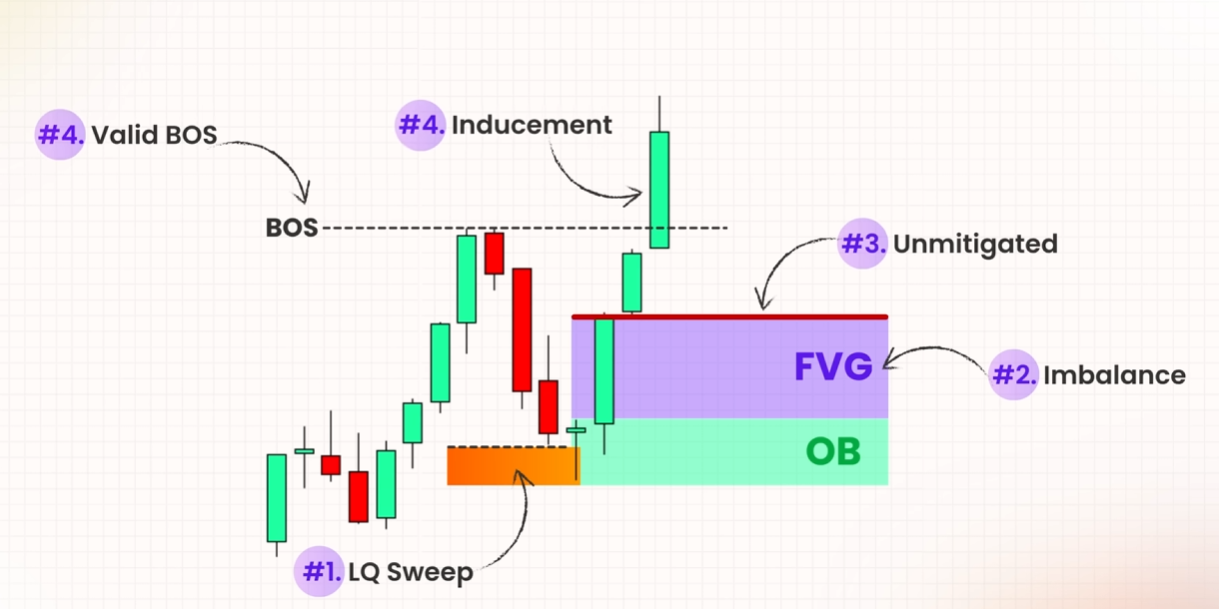
An order block is a supply or demand zone where large institutional traders (smart money) execute their orders. Unlike retail traders, institutions cannot place a single market order to fill 500,000 contracts at one price — doing so would spike the price immediately and force them to buy/sell at unfavorable levels. Instead, they spread their orders across a zone at slightly different levels.
If their orders don’t fully fill on the first visit, smart money engineers a return to that same area to fill remaining pending orders — which is why price often revisits a zone and reverses sharply. That zone is the order block.
The Flawed Retail Method
Most traders are taught: “Find the last red candle before a big bullish move — that’s the order block.” This is wrong. It ignores all validation criteria and leads to marking fake zones, resulting in repeated stop-outs.
The 4 Rules for a Valid Order Block
Rule 1 — Last Candle Liquidity Sweep
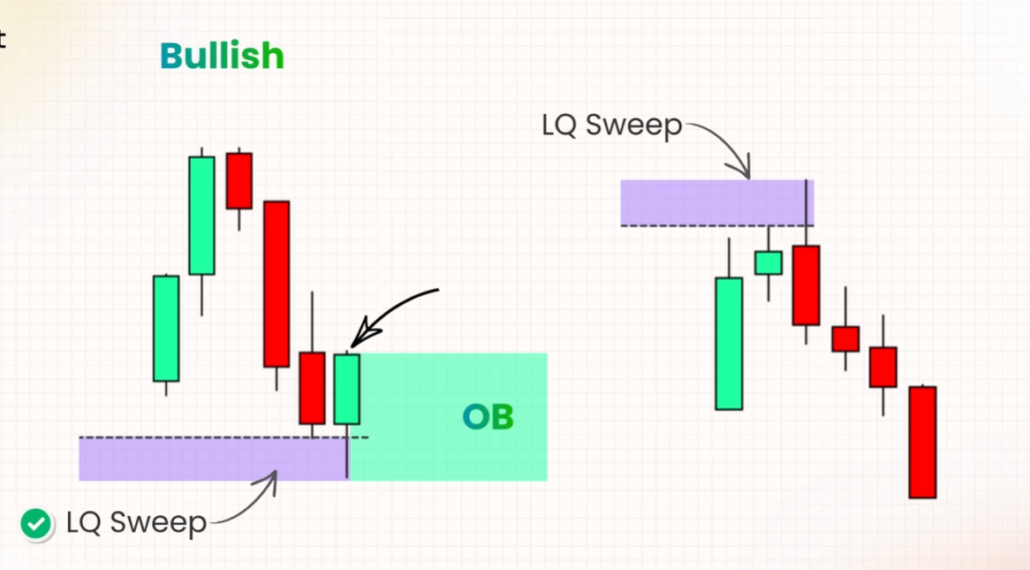
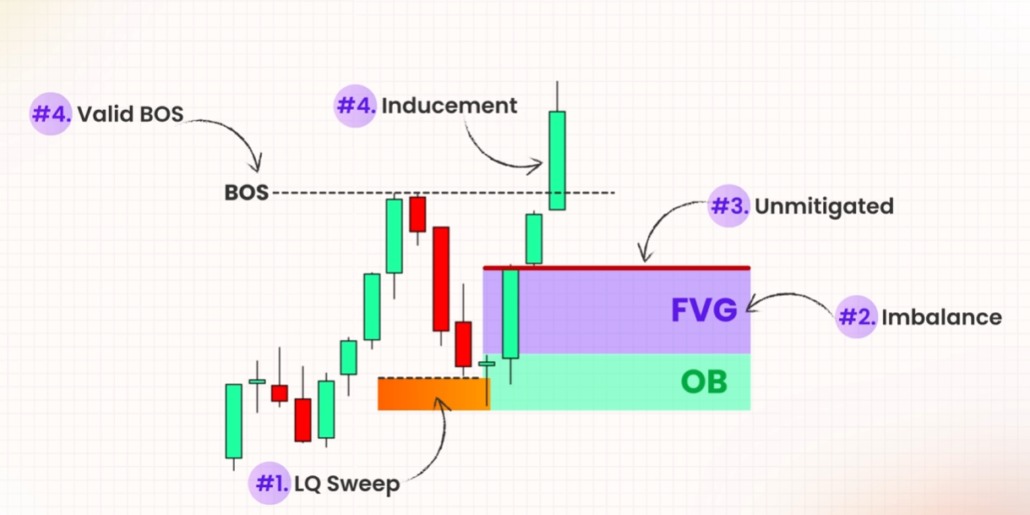
The last candle before the big move must have broken below the low of the candle before it (in a bearish setup for a bullish order block). This “sweep” is smart money’s fingerprint — proof they stepped in to collect orders.
- ✅ Candle broke below the prior candle’s low → valid
- ❌ Candle did NOT break below → invalid, no smart money confirmation
In a bullish setup for a bearish order block, the last green candle must have broken above the prior candle’s high.
Rule 2 — Inefficiency / Imbalance (Fair Value Gap)
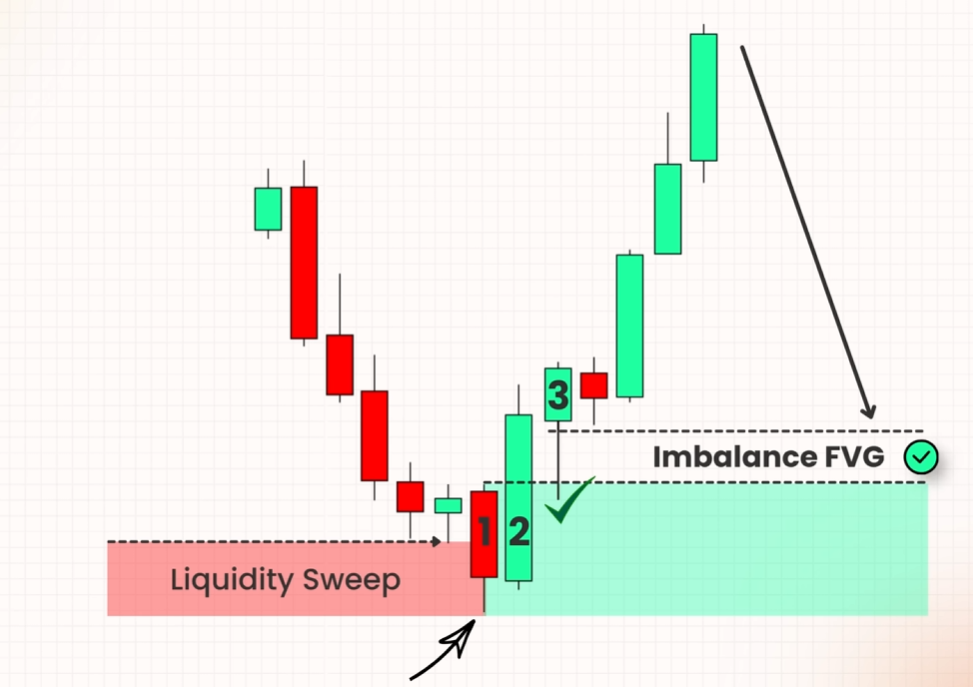
After the order block candle, the aggressive move that follows often leaves a visible price gap between candle 1 (the order block) and candle 3. This gap — where the wick high of candle 1 and the wick low of candle 3 don’t overlap — is called a Fair Value Gap (FVG) or price imbalance.
- The gap confirms the move was so fast and one-sided that orders were left unfilled — the market tends to return to fill them.
- Critical exception: If candle 3’s wick reaches all the way down and taps into the order block zone, the imbalance is already filled → the order block becomes invalid.
Rule 3 — The Order Block Must Be Unmitigated
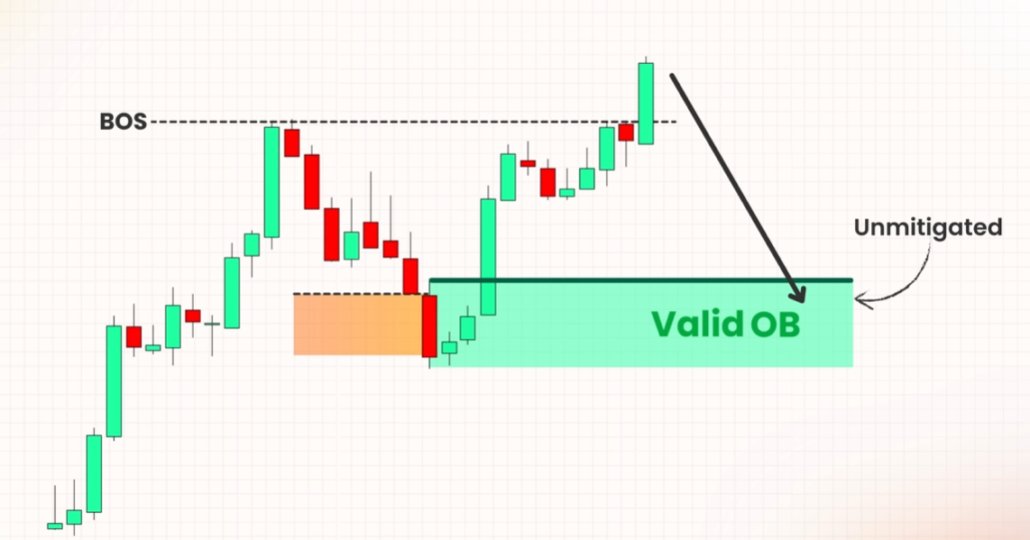
A valid order block is only usable once. The moment any candle’s wick taps into the order block zone, it is considered mitigated — the pending institutional orders have been filled and smart money has no reason to return.
⚠️ One of the most common trader mistakes: continuing to trade off a zone after it has already been touched once. A mitigated order block is a dead order block.
Rule 4 — Valid Break of Structure + Inducement
A truly high-probability order block also requires:
- Break of Structure (BoS): Price must have created a valid break of a previous swing high/low, confirming the trend direction.
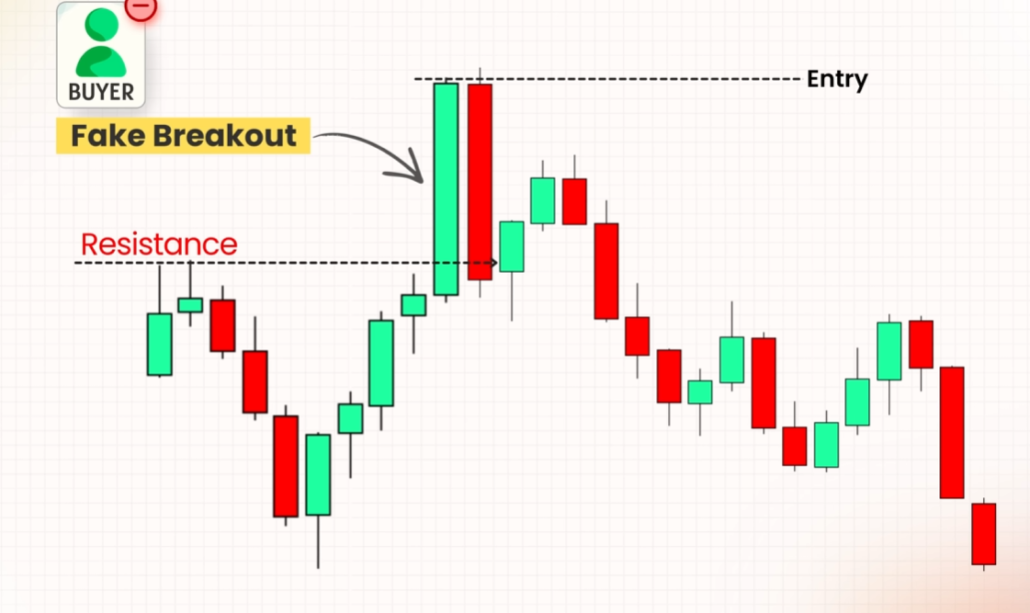
- Inducement: Before returning to the order block, price creates a fake breakout to trap retail traders. Retail traders see what looks like a breakout and jump in — the market then reverses, sweeps their stop losses, grabs that liquidity, and uses it to fuel the real move back from the order block.
Think of inducement as bait. Smart money creates a false signal, harvests retail liquidity, then executes the actual move from the order block zone.
All 4 Rules Checklist
| Rule | What to Check |
|---|---|
| 1. Liquidity Sweep | Last candle broke beyond the prior candle’s high/low |
| 2. Fair Value Gap | Visible gap between candle 1 and candle 3 that isn’t filled |
| 3. Unmitigated | No candle has tapped into the zone yet |
| 4. BoS + Inducement | Valid break of structure with a fake-out before the retest |
All four must be present. If even one is missing, skip the trade.
3 Entry Methods for Order Blocks
Entry Type 1 — Top of the Zone
- Place a limit buy at the very top of the order block zone.
- Stop loss: below the low of the order block candle.
- Advantage: You catch even shallow wicks that barely touch the zone and reverse immediately.
Entry Type 2 — 50% Level (Most Recommended)
- Enter at the midpoint of the order block zone.
- Stop loss: just below the order block zone with a small buffer.
- Best for: Large order block candles — gives you a tighter stop and a better risk-to-reward ratio.
Entry Type 3 — Bottom of the Zone
- Enter at the very bottom of the zone.
- Stop loss: further below, requiring more room.
- Downside: Price often reverses at the top or 50% level without reaching the bottom — you’ll miss many trades. Only use with very strong additional confirmation.
Key Reminders
- Candle color doesn’t matter. A green candle can be a bearish order block if it swept liquidity above the prior candle’s high. What matters is the liquidity sweep, not the color.
- Always trade in the direction of market structure. Bullish market = bullish order blocks only. Bearish market = bearish order blocks only. Never trade against the structure.
- Higher time frames = more reliable order blocks. The concept works on all timeframes, but accuracy increases with timeframe.